Sour Jujube Seed Tea: The Bedtime Cup Nobody Has a Word For
In certain parts of northern China, when someone mentions they've been having trouble settling into sleep at night, a well-meaning aunt or grandmother might say: "try toasting some suan zao ren." The phrase is delivered with the same casual certainty as "drink some warm milk" or "turn off your phone an hour before bed." Sour jujube seed — suan zao ren (酸枣仁) — is a small, flat, reddish-brown kernel from the seeds of the wild sour jujube fruit. It has a faintly sweet, slightly smoky taste when toasted, and it has been part of Chinese folk bedtime practice for as long as anyone can remember.
The sour jujube — suan zao (酸枣) — is a small wild fruit that grows across the hillsides of northern China, especially in Hebei, Shanxi, and Shaanxi provinces. The fruit itself is tiny, tart, and mostly pit: people eat it fresh when they find it, but the real interest lies in the seed inside the pit. That seed — flattened, oval, the color of roasted coffee — is what you find in the dried-goods section of Chinese pharmacies and some well-stocked grocery stores, sold in small bags labeled simply suan zao ren.
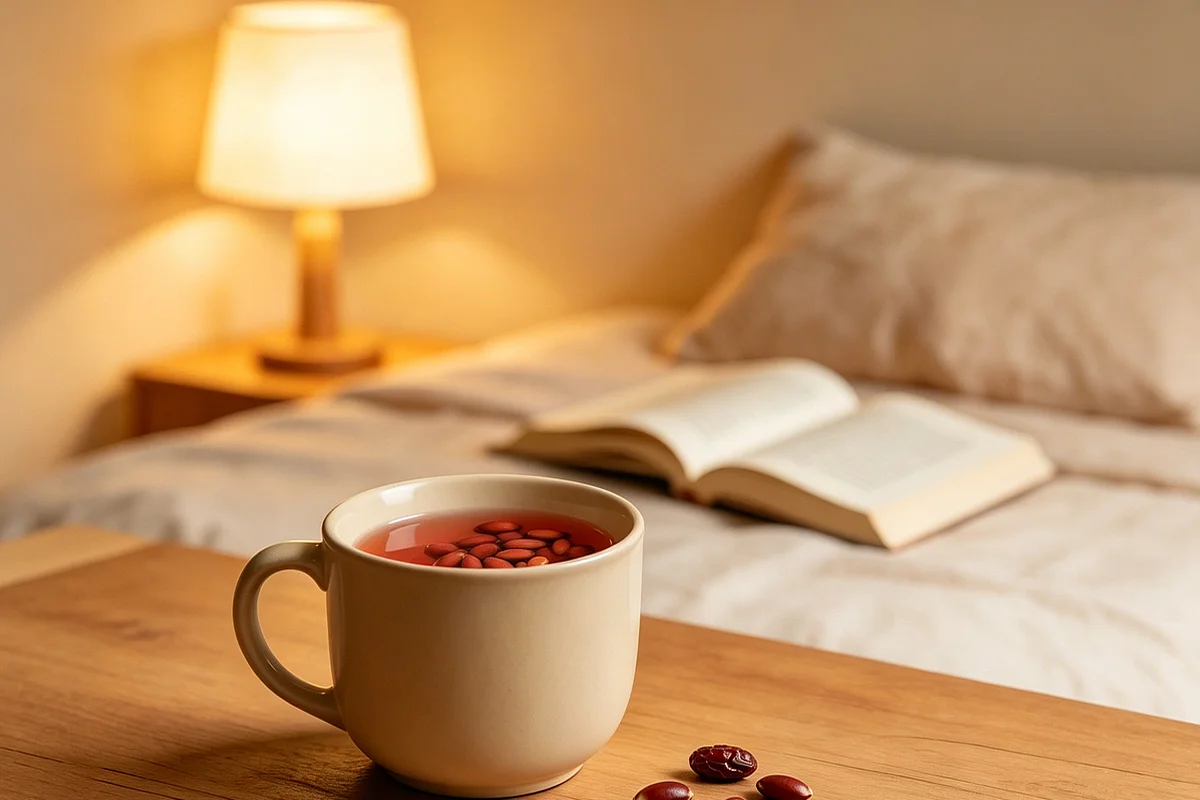
The practice of toasting the seeds and steeping them in hot water doesn't have a formal name in Chinese. People just call it "drinking suan zao ren water" (喝酸枣仁水). No ceremony, no instruction booklet. You buy the seeds, you toast them in a dry pan until they darken slightly and release a nutty, almost coffee-like aroma, you crush them a little, and you pour hot water over them. That's the entire habit.
What folk tradition says about it
In the language of Chinese folk kitchens — not medical literature, not product claims, just the way people talk about food and simple habits — sour jujube seed is often described as "calming" or "settling." The idea is that a cup of this tea in the evening, sipped slowly in a dim room, creates a kind of antecedent condition for rest: warm hands, a quiet taste, a moment of stillness that tells the body the active part of the day is over.
The same folk tradition that values ginger tea for its warming quality after a meal also values sour jujube seed tea for its quieting quality before sleep. They're not opposites — they're different tools for different times of the day. After a heavy dinner, you might reach for fresh ginger tea to feel settled. Later, as the house quiets down, you might switch to a cup of sour jujube seed tea as part of your wind-down routine.
Why the seed, specifically
The sour jujube seed has a distinctive chemical profile that makes it different from other herbal bedtime drinks. Unlike chamomile or lavender, which work primarily through aroma, sour jujube seed tea has a noticeable taste — nutty, bittersweet, with a faint astringency at the finish. Some people describe it as a lighter, wilder version of roasted barley tea. Others say it reminds them of weak coffee, but without the caffeine or the bitterness.
The folk preference for the seed over the fruit is based on practical observation: the fruit is tart, watery, and seasonal, while the seed is dry, shelf-stable, and concentrated. A small bag of dried seeds lasts months. The toasting process, which is essential for flavor, also makes the seeds easier to crush and steep — raw seeds are too hard for hot water to penetrate effectively.
How it's prepared in different households
There is no single correct way to prepare sour jujube seed tea. The variations are determined by what each kitchen has and what each person prefers:
- Toasted and crushed — the most common method. Seeds are toasted in a dry pan over medium heat until fragrant (about 3–4 minutes), then lightly crushed with a mortar and pestle or the back of a heavy knife before steeping.
- Toasted whole — some people skip the crushing step and steep the seeds whole. The flavor is milder and the steep time is longer.
- Simmered instead of steeped — a stronger version where the crushed seeds are simmered in water for 15–20 minutes, resulting in a darker, more concentrated liquid.
- Blended with other ingredients — sometimes a few goji berries or a slice of dried licorice root are added to balance the astringency.
None of these methods is more "correct" than another. The practice lives in the doing, not in the precision.
Materials
- Dried sour jujube seeds (酸枣仁) — about 10 to 15 grams per cup. Available at Chinese herbal shops, some Asian grocery stores, and online.
- A small dry pan — cast iron or stainless steel works well
- A mortar and pestle, or a rolling pin and cutting board, for crushing
- A cup or teapot for steeping
- Optional: a small strainer or tea infuser if you don't want seeds floating in your cup
Steps
- Rinse the dried seeds briefly in cold water to remove any dust.
- Toast the seeds in a dry pan over medium-low heat. Stir constantly. After about 3 minutes they will begin to darken and release a nutty, toasty aroma. Stop before they smoke or burn.
- Transfer the toasted seeds to a mortar or a sturdy bowl. Crush them lightly — not into powder, just enough to crack the outer shell so water can reach the inside.
- Put the crushed seeds into a cup or teapot. Pour freshly boiled water over them.
- Steep for 10 to 15 minutes. The water will turn a pale amber color.
- Strain or sip carefully — small seed fragments may float in the cup.
- Drink warm, slowly, in a quiet setting. The seeds can be re-steeped once for a milder second cup.
Comfort and safety
Sour jujube seed tea is a food-based folk practice, not a supplement or medication. The main safety consideration is the same as with any hot drink: test the temperature before taking a sip. If you find the taste too astringent, use fewer seeds next time or steep for a shorter period. If you don't like it at all, there's no reason to continue — the habit is supposed to feel pleasant, not medicinal.
Some people report that sour jujube seed tea causes mild drowsiness. This is a normal sensory response, not a pharmacological claim. If you experience it, avoid driving or operating heavy equipment until you know how the drink affects you personally. If you already take prescription sleep aids or sedatives, ask your healthcare professional before adding any new evening beverage — not because sour jujube seed is known to interact with medication, but because individual responses vary and a conversation with someone who knows your medical history is always the safer choice.
Who should check with a professional first
If you are pregnant, nursing, or managing a chronic medical condition, check with your healthcare professional before adding sour jujube seed tea to your routine. This recommendation applies to any new food or drink habit during those life stages, not specifically to sour jujube seed — the caution is universal and reflects a sensible approach to dietary changes.
Combining with other evening quiet practices
Many people who try sour jujube seed tea find it pairs naturally with other gentle evening habits from the Chinese folk tradition. A warm foot soak — such as the dried mugwort foot soak — creates a physical sense of winding down that complements the quiet mental space the tea helps establish. The combination isn't prescribed anywhere; it's just what people naturally gravitate toward when they're building an evening routine that feels right for them.
The Shennong Ben Cao Jing — the classical text from roughly two thousand years ago — lists sour jujube seed among the "superior" items, the category of substances considered suitable for ongoing daily use. The text describes it in terms related to quietness and ease. I include this reference as cultural and historical context, not as any kind of endorsement or instruction.
Referenced from Shennong Ben Cao Jing (Divine Farmer's Materia Medica)If you live outside China
Dried sour jujube seeds are available at Chinese herbal shops in most cities with a Chinatown, and from online retailers. Look for clean, whole seeds with a uniform reddish-brown color — the fresher they are, the more aromatic the tea will be. Store them in a sealed jar in a cool, dark cupboard. Properly stored, they last up to a year without noticeable loss of quality.
If you can't find sour jujube seeds, the practice itself — a warm, non-caffeinated evening beverage consumed slowly in a quiet space — is a tradition that exists in every culture in various forms. The specific ingredient matters less than the act of sitting still with something warm in your hands. That act, more than any particular seed or leaf, has been part of human evening practice for as long as there have been evenings to sit through.